
The most important
- Nobody has walked away from a business because its QR code looked cheap. What costs you the customer is a code that won't scan while they're standing in front of it.
- Office paper in direct sun goes unreadable in a few weeks. Commercial vinyl under a UV laminate is rated for around five years.
- The larger cost is reprinting. A code with the web address written into the pattern has to be physically replaced every time that address changes.
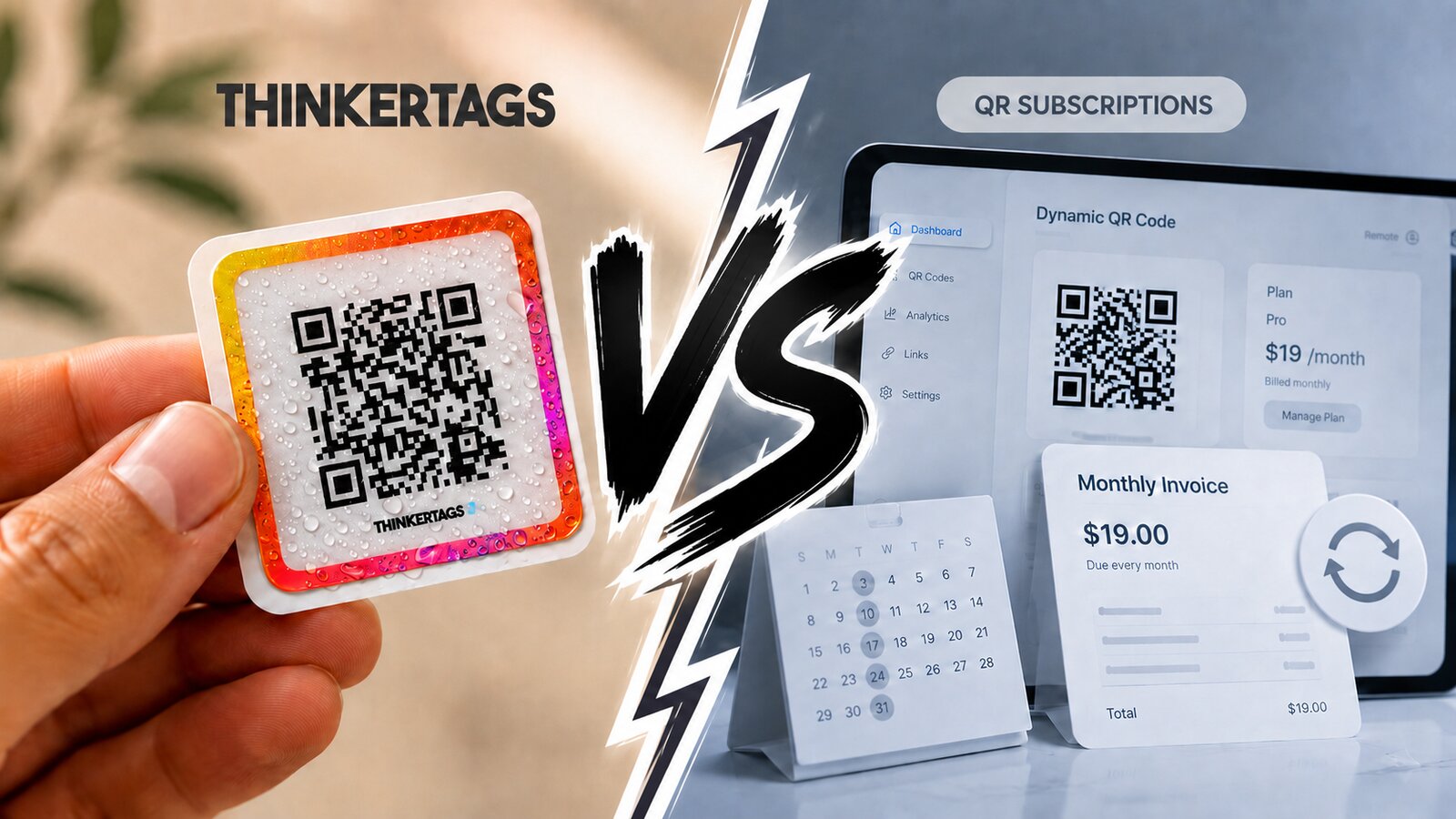
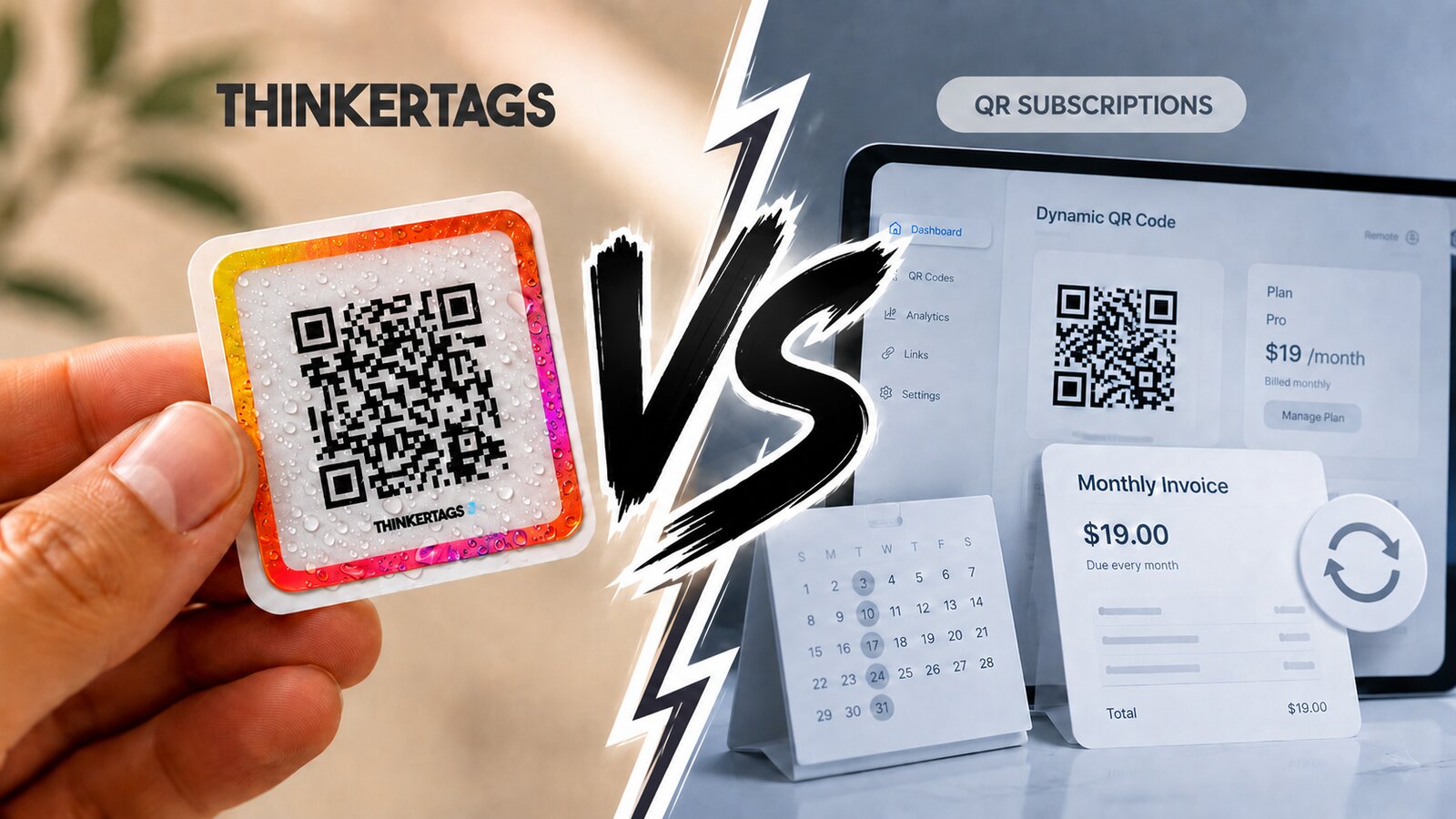
- Most free generators hand you a dynamic code and keep the redirect on their own domain, so every sticker you printed goes dead the day the trial ends.
- A printout is the right call for anything you'd happily print again — a week-long event, an indoor sign, a test to see whether people scan at all.
Someone is standing at your window with their phone a few inches from the glass, moving it back and forth to find an angle. Nothing opens. The code has been there since spring, the afternoon sun has been on it every day since, and the black has gone the colour of wet newspaper. They give it a couple of goes and carry on down the street.
The earlier version of this article argued that the taped-up printout was damaging your brand. I've stopped believing that. Think of a place you eat happily that has a printout on the door and a bit of curling tape holding it on, and the argument comes apart. People judge you on the food and the bill, and the sticker isn't what they remember.
What a bad QR code costs you is narrower and much easier to count: the person who was already reaching for it.
How long does a printed QR code actually last?
Somewhere between a few weeks and about five years, decided almost entirely by what it's printed on and how much sun it gets.
| What it's printed on | Where it lives | Realistic working life |
|---|---|---|
| Office paper, taped up | Window in direct sun | A few weeks before scanning gets unreliable |
| Inkjet print, cold laminate | Indoors, out of the sun | Months |
| Commercial vinyl, UV laminate | Outdoors | Around five years |
Sunlight is one way it goes. Tape lets go in the first cold spell, paper cockles after rain so the pattern sits in a curve the camera struggles to flatten, and a code behind condensation reads badly even when the ink is perfect. None of that shows up as a complaint. The customer just stops trying, and you find out weeks later when someone mentions it, or you don't find out at all.
That last part is what makes this worth spending money on. A broken card terminal gets reported within the hour. A dead QR code is invisible from the inside of the business, and a shop owner emails us with that story roughly once a month.
Reprinting is the expensive part
Every code with the web address written into the pattern has to be replaced when that address changes, and addresses change more often than anyone plans for.
A static code is a picture of a URL, and that's the whole of it. The pattern is permanent and so is the destination, which is fine right up until you move your menu to a new platform, change booking systems, run a campaign that needs its own landing page, or rename the PDF. Then every printed copy points somewhere that no longer exists, and the only fix is new stickers.
The version of this that hurts is volume. Printing fifty of something and finding the URL wrong on all fifty is a bad afternoon: the print cost again, the trip out to swap them, and a couple of weeks where some of them are still wrong because one got missed on a machine at the back. [NEEDS REAL FIGURE — how many customers come to us after a reprint like this, and the batch sizes involved. Worth pulling from support email.]
A dynamic code moves the decision into software. The pattern stays the same forever, and where it lands is a setting you change from your phone. Print once, repoint as often as you like. If you want the full mechanics of static versus dynamic, it's in do QR codes expire.
Who can switch your code off
Whoever runs the redirect behind a dynamic code — which, with most free generators, is the generator.
The pattern catches people because the free tier works properly. You make the code, it opens your page, you're satisfied enough to order two hundred stickers. Six weeks later the trial ends and the provider either turns the redirect off or points it at an upgrade page. Your stickers are fine and so is the URL inside them; somebody else's billing system decided they were finished.
The paid way out runs $5–15 a month for entry plans and $15–50 for standard ones, checked across the main providers in July 2026, and what arrives at the end of it is a file. Printing, material and mounting stay with you. We worked through the whole comparison in what dynamic QR codes cost in 2026.
If you're running fifty codes across several sites with team permissions and scan data going into a CRM, that subscription is buying you real software and the price is honest. Paying it every month so three links on a counter sticker keep resolving is rent on a redirect.
When a printout is completely fine
When you'd be happy to print it again.
A code for a three-day market stall, a sign inside a room that never sees direct light, a sheet on the wall of the staff kitchen pointing at the holiday form — paper is the correct answer to all of those, and buying a five-year sticker for a three-day job is a waste of money. The same goes for testing. If you don't know yet whether your customers will scan anything at all, print one, tape it up for a fortnight and count. We'd rather you did that than order a box of tags for an idea you'll drop before the month is out.
The other case is a static code pointing at a domain you own. You control the redirect at your end, so you can move the destination whenever you like without touching the print, and nobody can switch it off. That's a genuinely permanent code and it costs nothing beyond the printing.
What we make, and what it costs
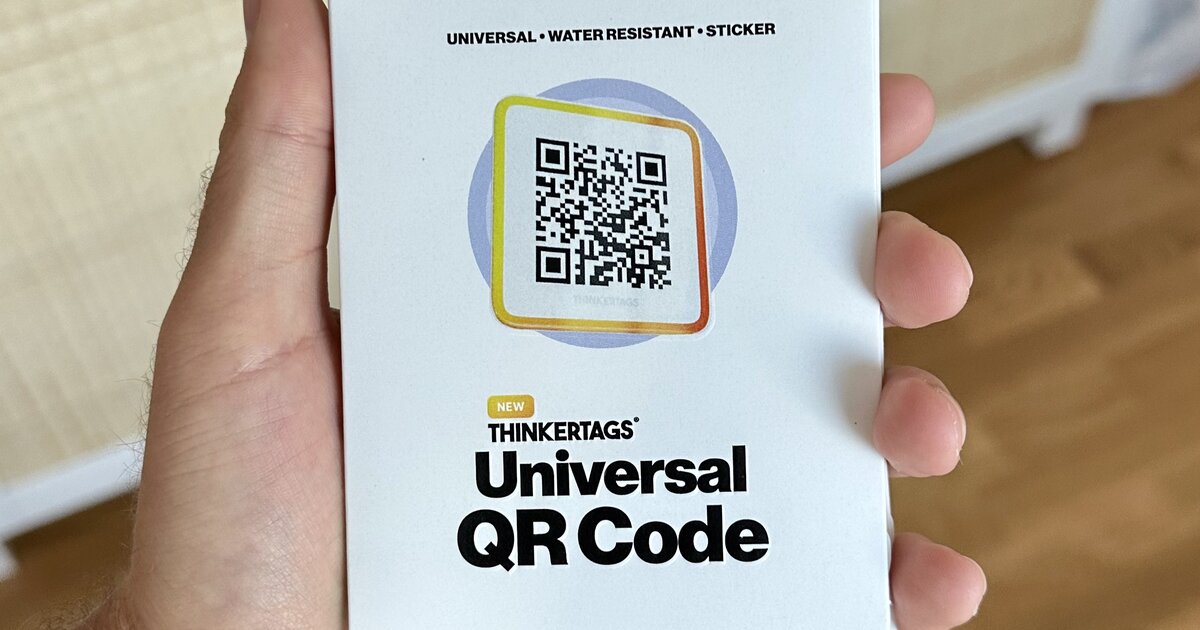
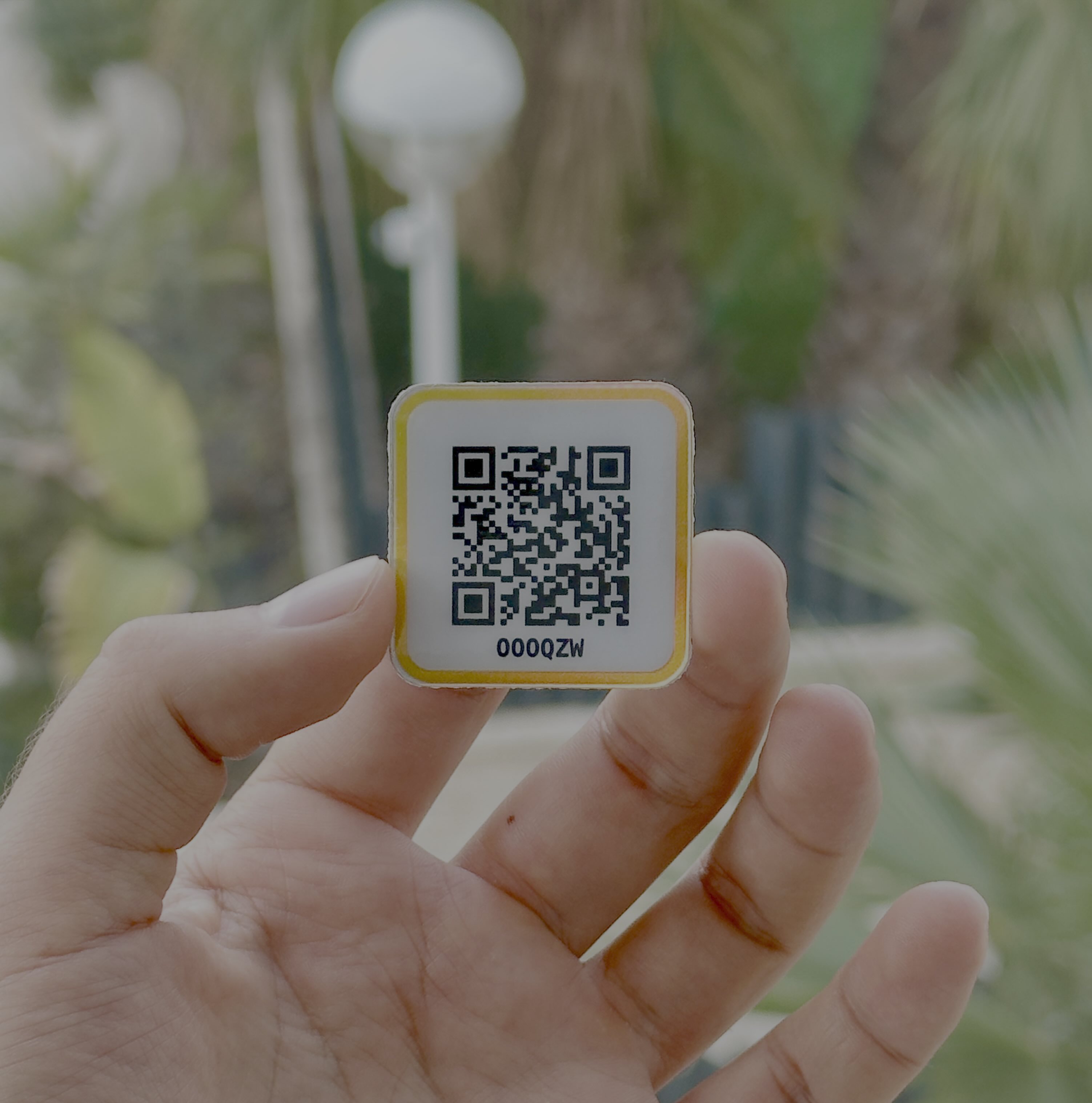
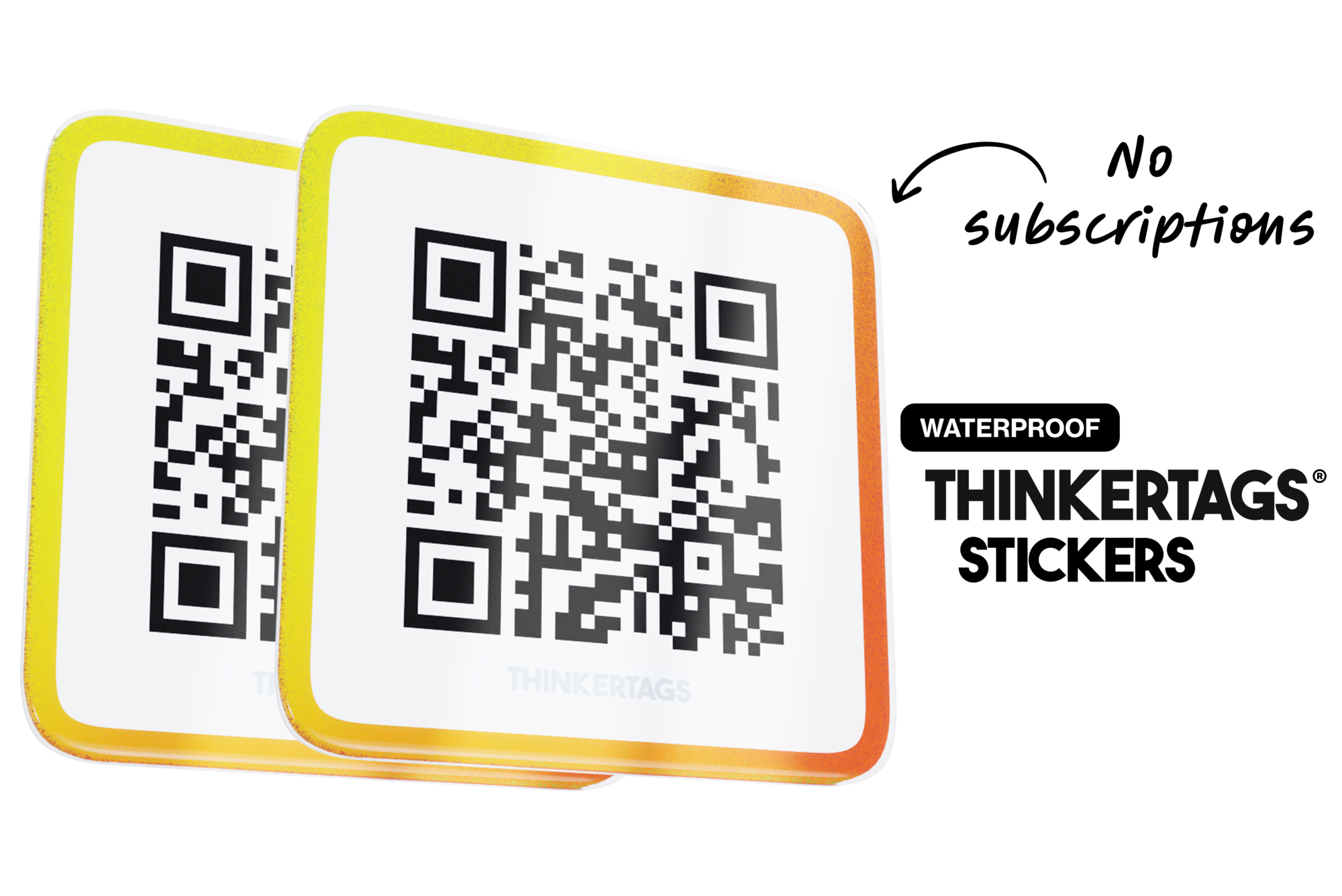
A Thinkertag is a vinyl sticker with a UV-protective laminate, an NFC chip inside it and the dynamic redirect included permanently, for €19.99 paid once.
The laminate is rated for around five years outdoors, it's waterproof, and it survives the kind of daily wipe-down a counter or a machine gets. The NFC chip earns its place on the days the printed side is dirty or the light is bad, since a phone held against the tag opens the same link without the camera being involved. There's no tier where the redirect stops, so there's nothing to cancel and nothing that can go dark while you're not looking. Against a subscription at $12 a month it has paid for itself in about two months.
What it won't do is make anybody want what you're selling. A beautiful tag on the door of a place people don't want to go into is a tidier version of the same problem, and if your codes aren't being scanned because nobody knows what's behind them, the sticker isn't the thing to fix first.
[NEEDS REAL FIGURE — our own field failure rate. How many tags have come back or been reported unreadable, out of how many shipped, and over what period? This is the number no competitor can quote.]
QR Code Stickers
Thinkertags Stickers
Our mission is to make beautiful and scratch resistant stickers with NFC that elevate your brand, are updatable and last a long time.
 Shipping today




Our mission, tags that you will love.

Common Questions
Does a cheap QR code really lose you customers? Only when it stops working. A printout that scans reliably does the same job as an expensive sticker, and customers don't grade the material. The loss happens when the code has faded, curled or been switched off, because the person in front of it was already interested enough to get their phone out and now has nowhere to go.
How long does a QR code sticker last outdoors? Office paper in direct sun becomes unreliable within weeks. An inkjet print under a cold laminate will hold up for months indoors. Commercial vinyl with a UV-protective laminate is typically rated for about five years outdoors, which is the specification to ask for if the code is going on a window, a machine or anything exposed.
Can I change where a printed QR code points? Only if it's dynamic. A dynamic code contains a short link you control, and the destination behind that link can be changed at any time without reprinting. A static code has the destination written into the pattern, so changing it means new stickers. Check which kind you have before printing in volume — if the code contains a short domain you don't recognise, it's dynamic and somebody else owns the redirect.
Are free QR code generators safe to use? For a static code pointing at your own domain, yes. For anything you're printing in quantity, read the terms first. Many free generators issue dynamic codes routed through their own short domain and deactivate the redirect when a trial ends, which takes every copy you printed offline on the same day.
Is a QR code sticker worth it for a small shop? It depends on how long the code needs to survive and how often the destination will change. One code by the till pointing at a menu you update seasonally is worth doing properly. A code for a weekend event isn't. The number to weigh it against is the cost of reprinting plus the hour of your time it takes to go and replace them.
What size should a QR code be? Big enough to scan from where people will stand, which is roughly a tenth of the reading distance. A code read from arm's length can be small; one on a window that people scan from the pavement needs to be considerably bigger. Sizing, contrast and placement are covered in the ultimate guide to QR code stickers.
Want a code that keeps working and can be repointed whenever you like? Explore Thinkertags — vinyl with UV laminate, NFC and QR in one sticker, dynamic links included for life, no monthly fee.